White Bean Stew Recipe with shallot
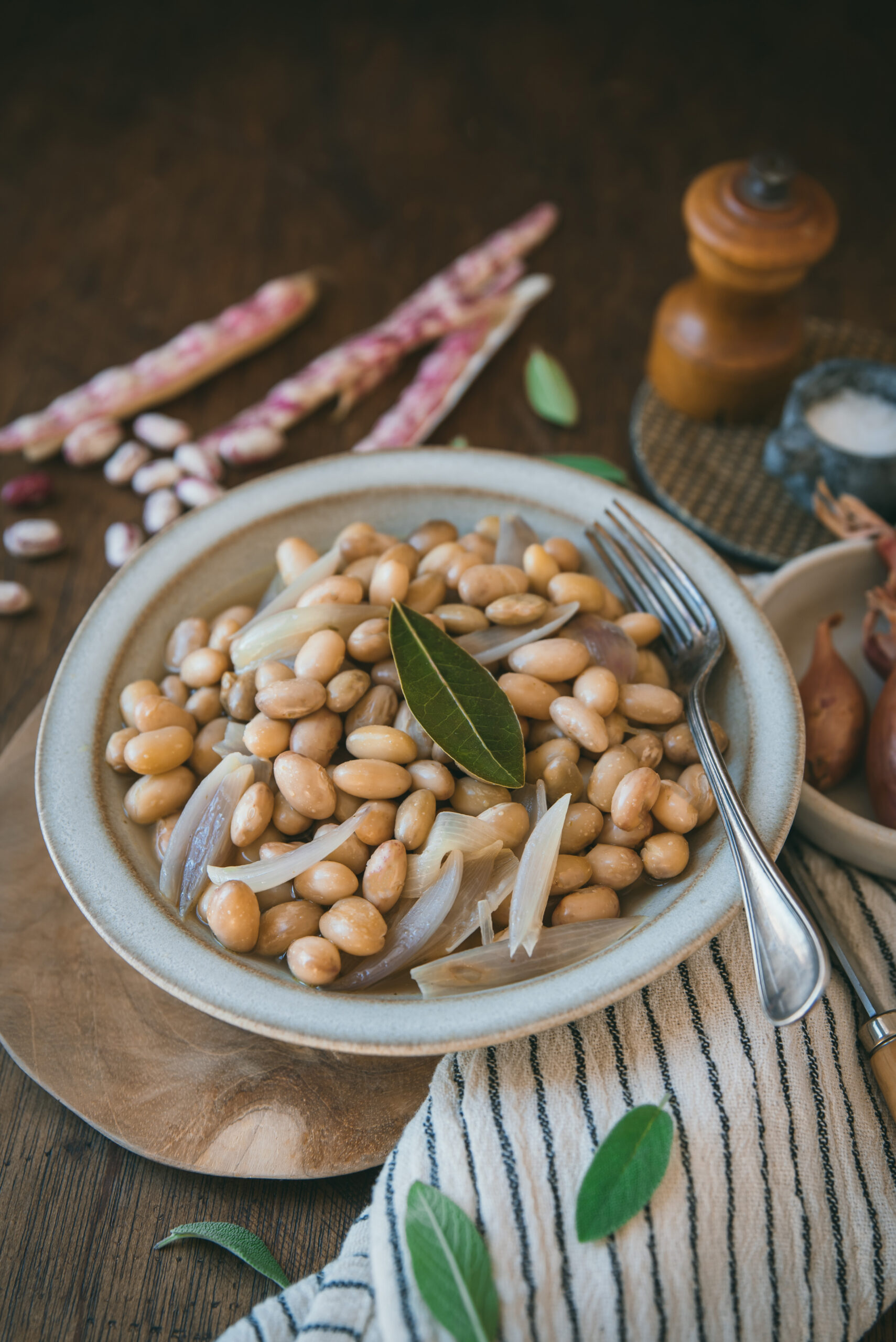
White Bean Stew recipe, with a little taste of childhood.
For me, this White Bean Stew starts in my grandmother’s vegetable garden, and takes me straight back to the long summer days I spent in the Charente region of France.
I can still picture the baskets overflowing with fresh white beans, or mogettes, as we call them there. One of the must-do activities during those family vacations was helping my grandmothers and aunts shell them. The bucket filling up with empty pods seemed enormous to me. But with several of us working together, all those hands busy shelling beans while conversations went on forever, the job somehow went pretty quickly.
My grandmother would then cook the beans and preserve them in large glass jars. She often served them very simply, with her homemade tomato sauce. Nothing complicated, but those slow-cooked, generous and comforting dishes have stayed with me. They are the kind of food that brings back a whole place and a whole moment in your life with just one bite.
She also had a little trick for making beans easier to digest: she would add a few fresh sage leaves to the pot. I still think of her whenever I cook beans this way.
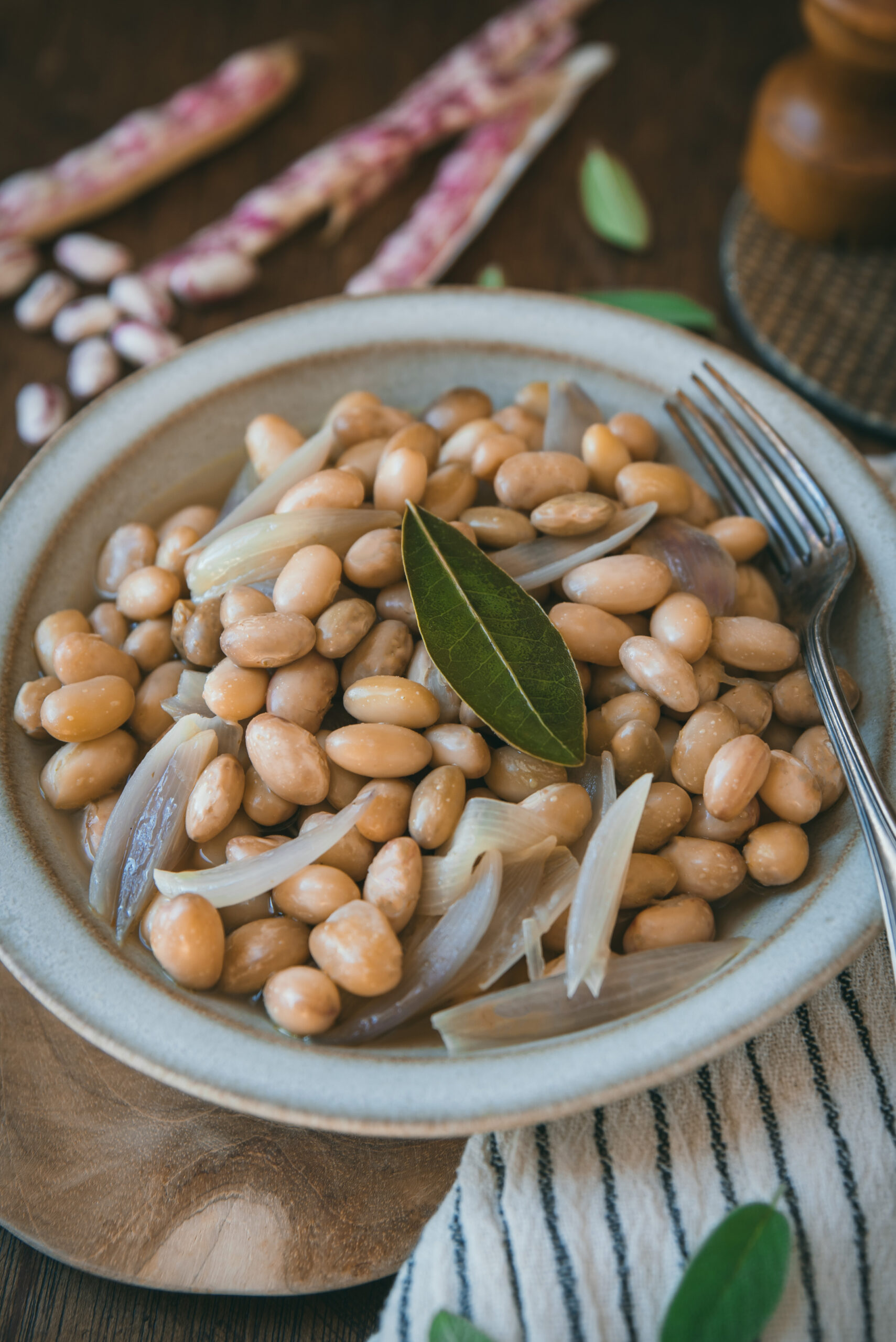
So this is my version: white beans with shallots, gently simmered in a flavorful broth until they are tender, creamy and full of flavor. It is a simple white bean stew, inspired by those childhood memories and the kind of unfussy family cooking I love.
You can make this stew with freshly shelled white beans or dried white beans. The cooking time will be different depending on which one you use, so be sure to check the recipe card below. I don’t recommend canned beans for this particular recipe. Since they are already cooked, they won’t have enough time to simmer in the broth and really soak up all those flavors.
For serving, you can keep things simple with a few grilled sausages. I also love adding chopped tomatoes toward the end of cooking and serving the beans with fried eggs, or with slices of toasted bread rubbed with confit garlic. Nothing fancy—just a seriously good, comforting meal.
And, like most good slow-cooked dishes, this white bean stew keeps really well. Once cooled, remove the bay leaf and transfer the leftovers to an airtight glass container. They will keep in the refrigerator for 2 to 3 days, or in the freezer for up to 2 to 3 months. To reheat, simply warm the stew gently in a saucepan or use the microwave.
White Bean Stew Recipe with shallot
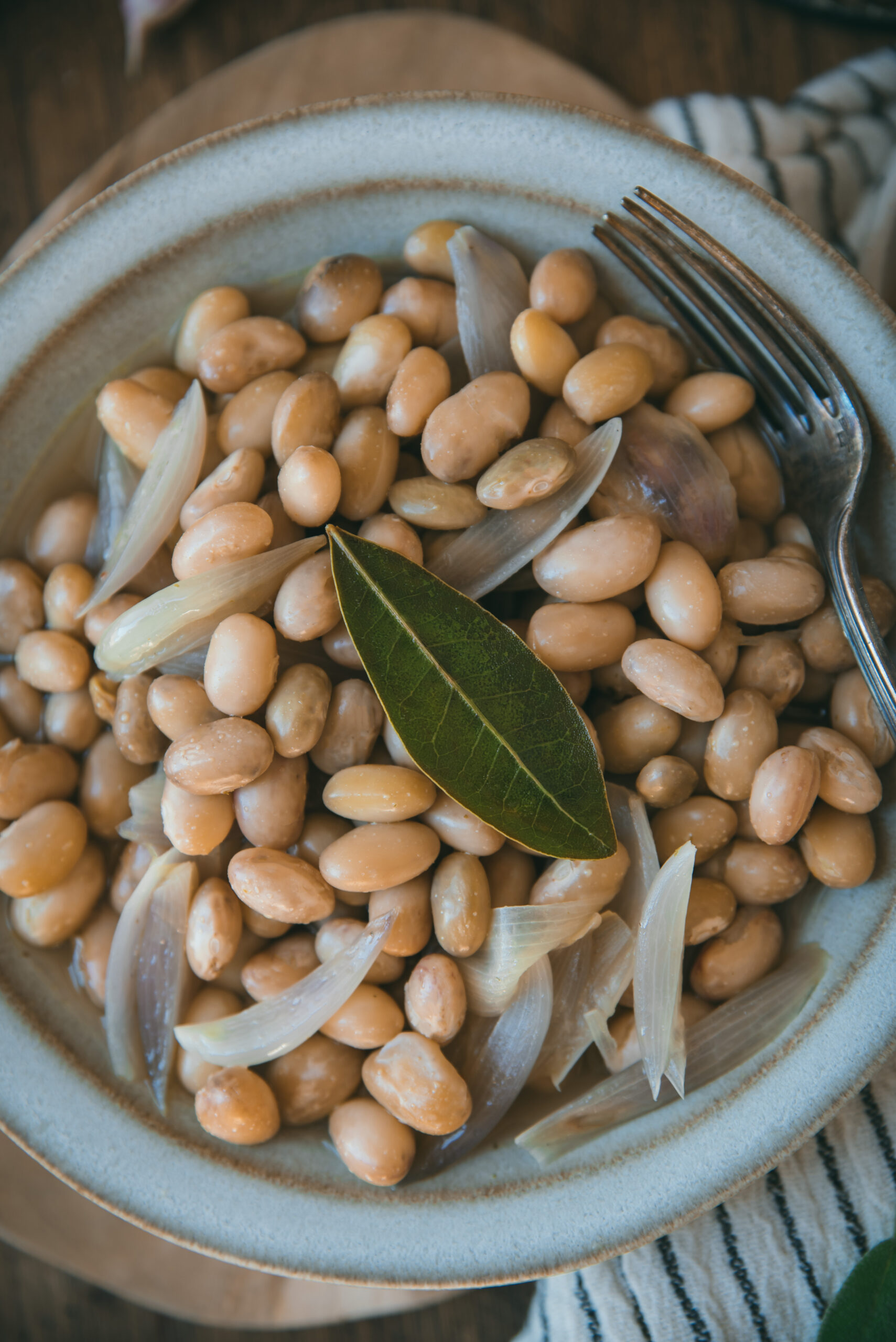
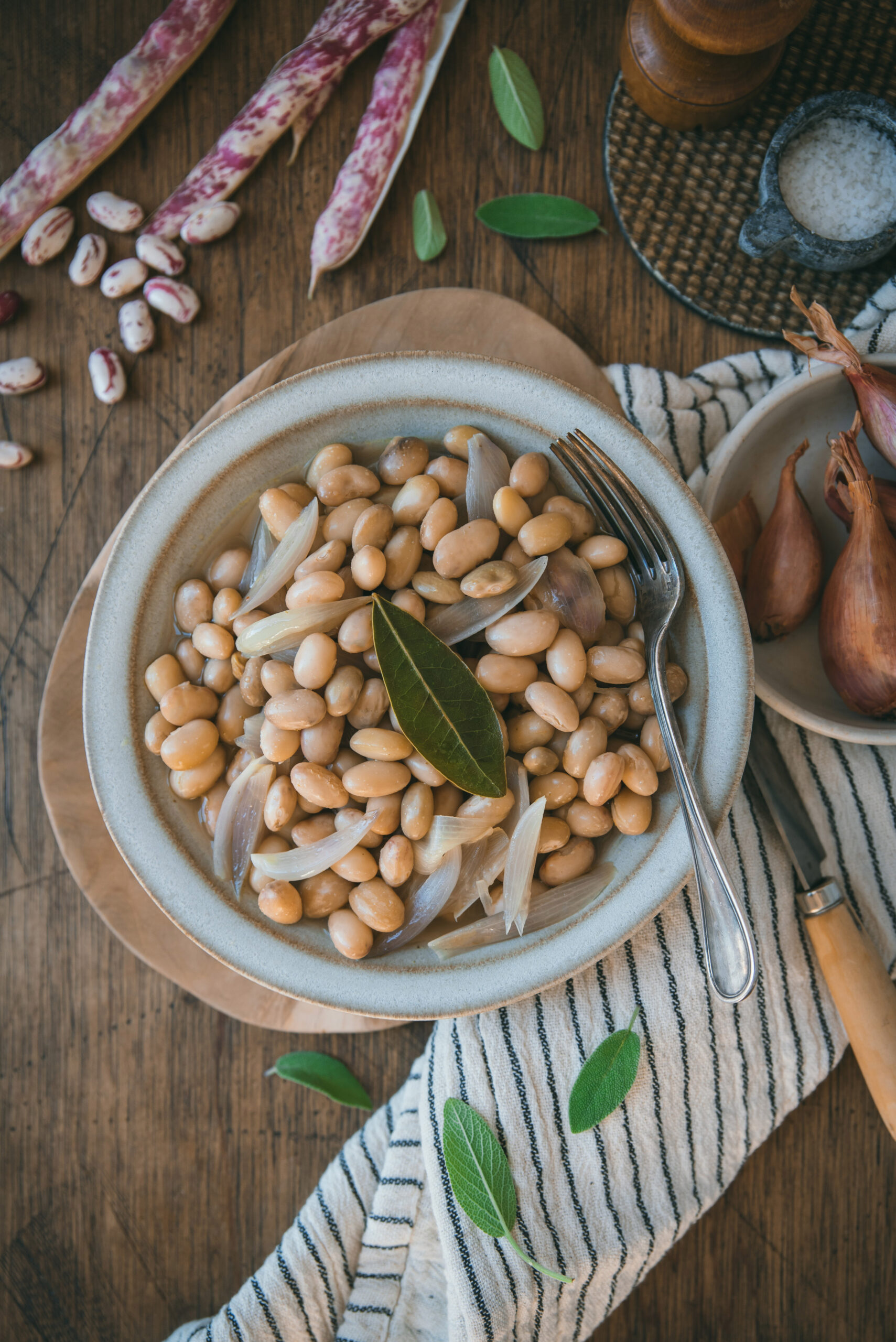
What ingredients do you need to prepare this recipe for white beans with shallots?
- freshly shelled white beans
- small shallots
- unpeeled garlic cloves
- some good olive oil
- bay leaves and sage leaves
- vegetable broth
- salt and freshly ground pepper
Other recipe ideas you might like:
White Bean Stew Recipe with shallot
Ingredients
- 400 g freshly shelled white beans
- 4 to 6 small shallots
- 4 unpeeled garlic cloves
- 2 tablespoons olive oil
- 3 sage leaves
- 2 bay leaves
- 700 ml vegetable broth
- Salt and freshly ground pepper
Instructions
- Start by cooking the shelled white beans with the sage leaves in a large pot of boiling salted water for 20 minutes. Then, drain them.400 g freshly shelled white beans, 3 sage leaves
- Peel the shallots and cut them in half lengthwise.In a large saucepan or Dutch oven, sauté them with the olive oil and garlic cloves until golden brown.4 to 6 small shallots, 4 unpeeled garlic cloves, 2 tablespoons olive oil
- Add the drained white beans and the bay leaves.2 bay leaves
- Cover with vegetable broth, season with salt and pepper, then cook covered for 40 to 50 minutes. Stir occasionally.700 ml vegetable broth, Salt and freshly ground pepper
- Check that the beans are cooked before serving. If necessary, continue cooking for another 10 to 20 minutes.If the broth has not reduced sufficiently, you can cook it uncovered over high heat for the last 10 minutes, stirring occasionally.
- To serve, you can accompany it with toasted bread and confit garlic, or grilled sausages.If you wish, you can adjust the seasoning (salt and pepper) and drizzle with a little olive oil.
Notes
Cooking times may vary depending on the variety and size of the beans. Adjust the cooking time by tasting as you go to ensure the beans are tender yet retain a firm texture.